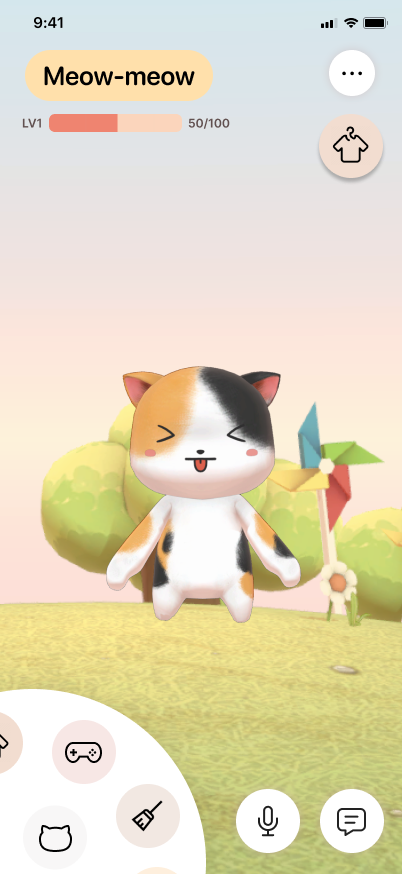
What happens when you give kids an AI pet that chats back, battles with sass, and makes new friends? You get Meowster — an adaptive, gamified companion app where every interaction feels alive, playful, and totally purr-sonal.
Meowster is an AI-powered virtual pet app built by Starward Studios — think Tamagotchi meets ChatGPT, but with cats. Kids can feed, dress, and chat with their Meowster, play competitive mini-games like "Mean Talk," and connect with other players' pets. The catch? The AI companion adapts to how you play, creating a unique bond with every user.
Our team of four UX Masters students at the University of Michigan School of Information partnered with Starward Studios for our SI 699 capstone. The mission was clear: take the existing Meowster app and make it more engaging, more intuitive, and more fun — while keeping it safe for younger players. We had 8 months, a lot of sticky notes, and an unreasonable love for cartoon cats.
What I Set Out To Do
🐱
Create Everyday Companions
Design AI pets that adapt to user preferences and behaviors over time — making each Meowster feel uniquely yours.
🎮
Level Up Engagement
Enable users to connect through games and conversation, turning solo play into a social experience.
🛡️
Keep It Safe
Implement parental controls and content moderation so families can feel confident about their kids' screen time.
💜
Build Real Bonds
Strengthen the emotional connection between users and their AI pets through adaptive learning design.
The Questions Driving My Research
🐾
Role of Pets
What role do virtual pets play in young people's gameplay, and how can they evolve beyond passive companionship?
💛
Emotional Connection
What factors contribute to a lasting emotional bond between users and AI companions?
🔄
Re-Engagement
Which game design elements keep users coming back and maintaining interest over time?
⚖️
Ethics & Safety
What ethical considerations must be addressed when designing AI-driven apps specifically for children?
How I Got to Know the Players
Before touching a single pixel, I needed to understand the landscape. Who am I designing for? What do kids actually want from an AI pet? What keeps parents up at night about their children's gaming habits? I went deep — combining secondary research, competitive analysis, expert interviews, co-design sessions, and heuristic evaluation to build a 360-degree understanding.
Ethics & Recruitment
🎓
PEERRS Certified
Every team member completed U-M's human subjects training to work responsibly with minors.
🤝
Connected Recruitment
I recruited children through existing relationships to create a comfortable, natural environment.
📋
Full Consent Process
Consent forms for all sessions, plus parent interviews to capture the complete family perspective.
📚
Secondary Research
I explored academic literature on AI companions and children. The research confirmed that AI pets can offer emotional support, reduce loneliness, and even foster creativity — but only if the experience feels authentic and trustworthy.
🕹️
Competitive Analysis
I evaluated 10+ competitor apps including Tolan, Replika, Roblox, My Talking Tom, and Pou. Tolan emerged as Meowster's closest rival, but was limited by constrained user input. Meowster's edge? Physical pet care + social gameplay + adaptive AI.
🔍
Heuristic Evaluation
Using Nielsen Norman's 10 Usability Heuristics, I audited the existing Meowster app and identified key issues: overlapping UI components, unreadable text, missing exit buttons in Mean Talk, and environment descriptions that didn't match the visuals.
🎓
Expert Interview
I spoke with Dr. Kishonna Gray, a UMSI professor and gaming industry expert, who emphasized inclusivity, culturally resonant narratives, and the importance of co-designing with kids — not just for them.
👨👩👧
Parent Interview
A working mother of five shared concerns about screen time, emotional regulation, and manipulative in-app purchases — but also recognized gaming's role in cognitive and social development. She advocated for parental controls and time limits.
👧🏾👦🏼👧🏽👦🏿
Co-Design Sessions
I ran sessions with participants aged 8, 13, 15, and 18. Kids flagged the Mean Talk feature as confusing, wanted ready-made outfits instead of tedious customization, craved voice messaging, and expressed interest in both chill and competitive mini-games.
Key Insight
Successful children's games keep rounds under 5 minutes to maintain focus and replayability. Games like Brawl Stars, Among Us, and Fortnite Creative all follow this pattern — and it directly shaped my redesign of Mean Talk's timed round structure.
Competitor Showdown
Pick a challenger to see how they stack up against Meowster across key dimensions.
🐱
Meowster
Our Redesign
VS
Pick a competitor above to start the battle
🏆
Meowster's Biggest EdgeOnly app combining physical pet care, adaptive AI conversation, social gameplay, and parental controls in one experience.
🎯
Closest Rival: TolanTolan matched on AI personality, but fell short on social features, game variety, and safety controls for younger users.
⚠️
Gap in the MarketNo competitor offered kid-safe AI companions with both social gaming and meaningful parental controls — that's the space Meowster fills.
02 — Making It Real
From Sketches to Screens
My design process moved through three waves of fidelity — each one informed by real user feedback, not assumptions. Every sketch had a reason. Every screen was tested. Here's how I turned sticky-note ideas into a polished, playful experience.
Prioritizing What to Build
With insights from six research methods plus client feedback, I needed a framework to decide what to build first. I used MoSCoW prioritization combined with dot voting to create an evidence-backed roadmap.
Must Have
Messaging Redesign
Mean Talk Overhaul
Friend Acceptance Flow
Parental Controls
Should Have
Dynamic Backgrounds
Shop Redesign
Clothing Customization
Could Have
Voice Messaging
Mini-Game Variety
Widget Feature
Won't Have (Yet)
Multiplayer Mode
AR Features
Three Design Explorations
💬
Message Display
Redesigned chat so messages float over the screen, keeping your Meowster visible during conversations.
🌄
Adaptive Environments
Backgrounds shift dynamically based on user commands — feed your cat and watch the scene change.
⚔️
Mean Talk Overhaul
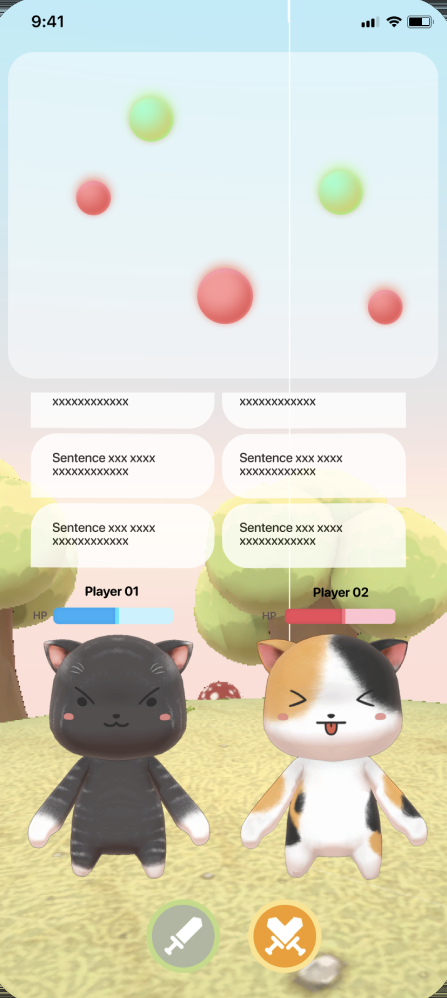
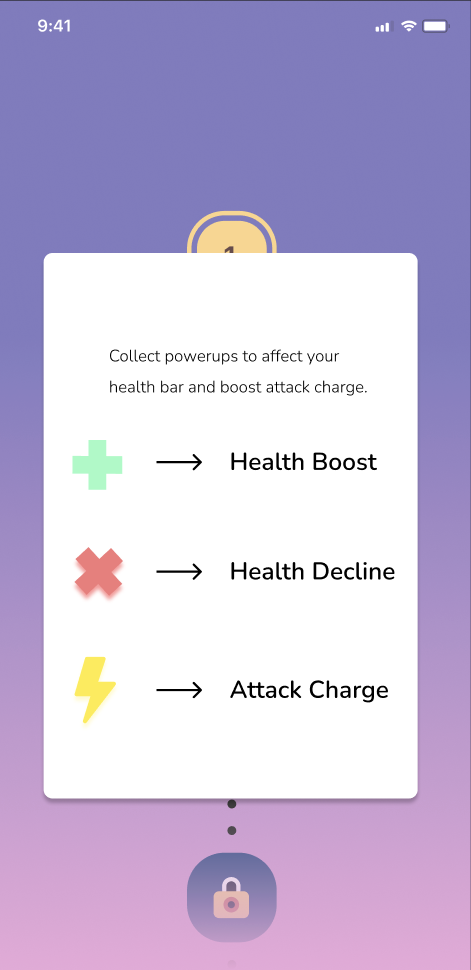
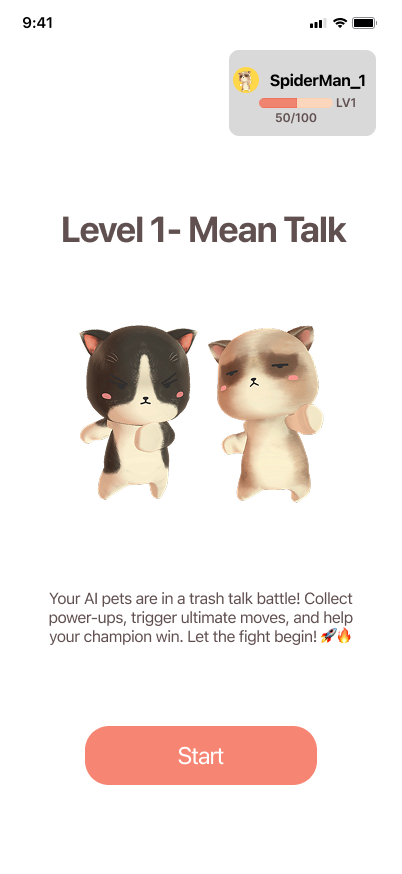
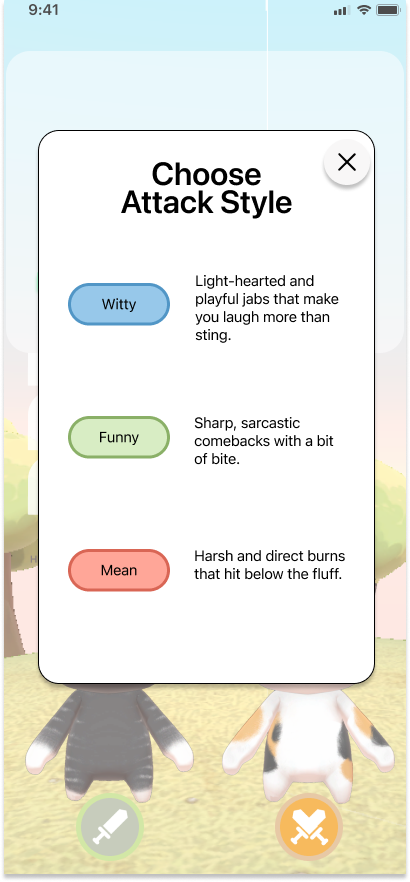
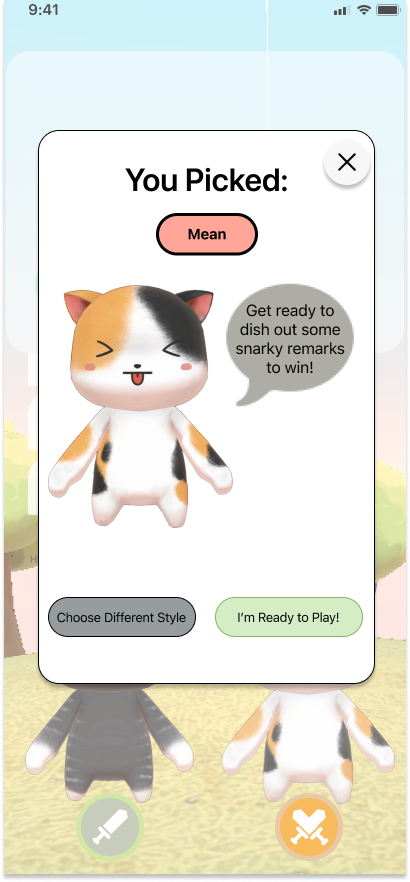
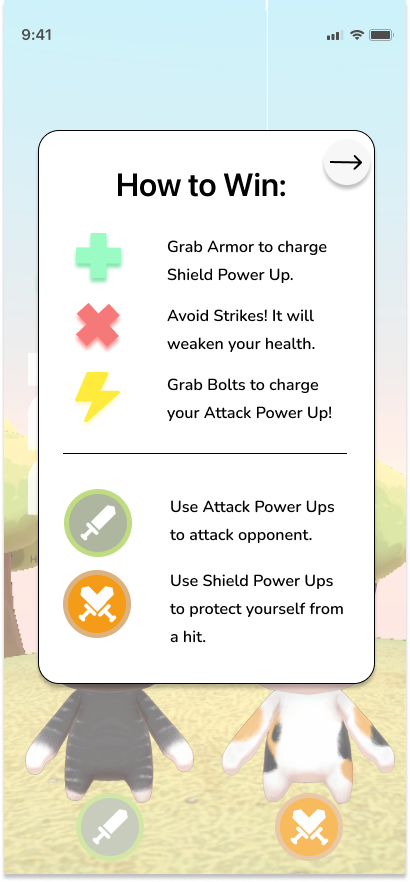
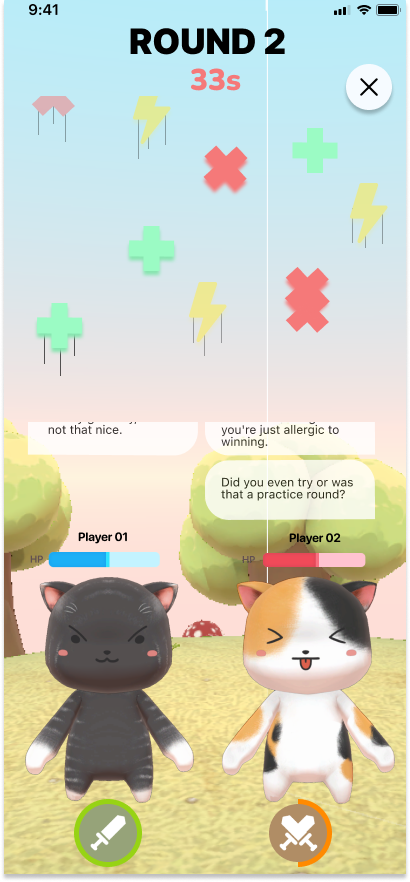
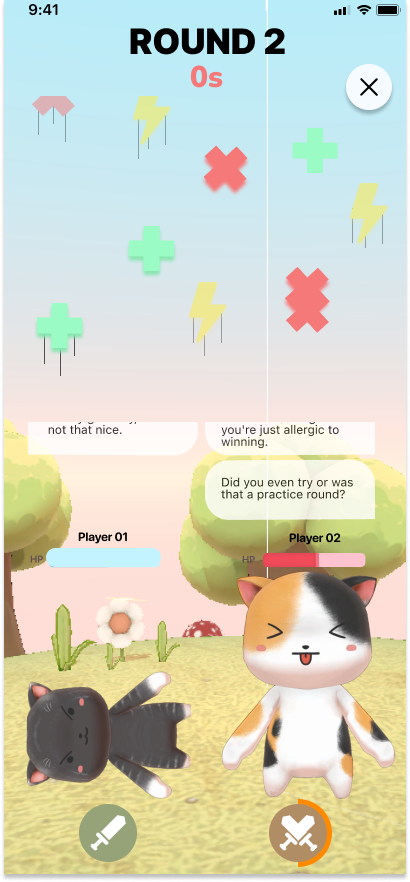
Timed rounds, strategic power-ups, and selectable insult styles turned a confusing feature into a fan favorite.
🔔
Friend Notifications
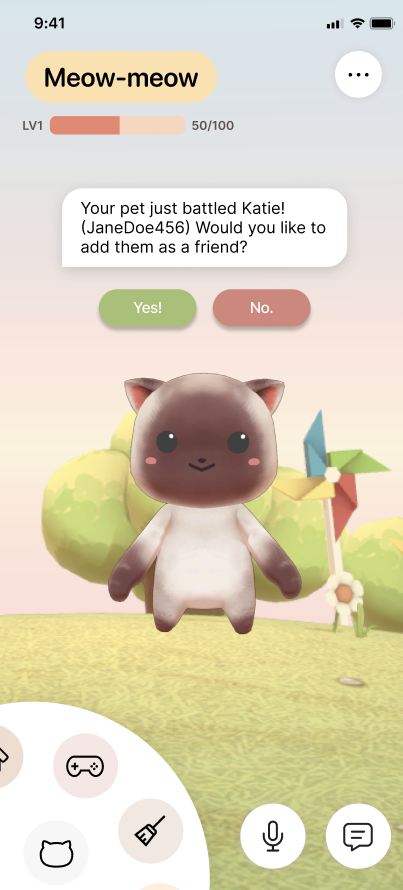
A system to show users the friends their Meowster made while away — requested by Starward Studios to drive return visits.
Low-Fidelity: Pen, Paper & Possibilities
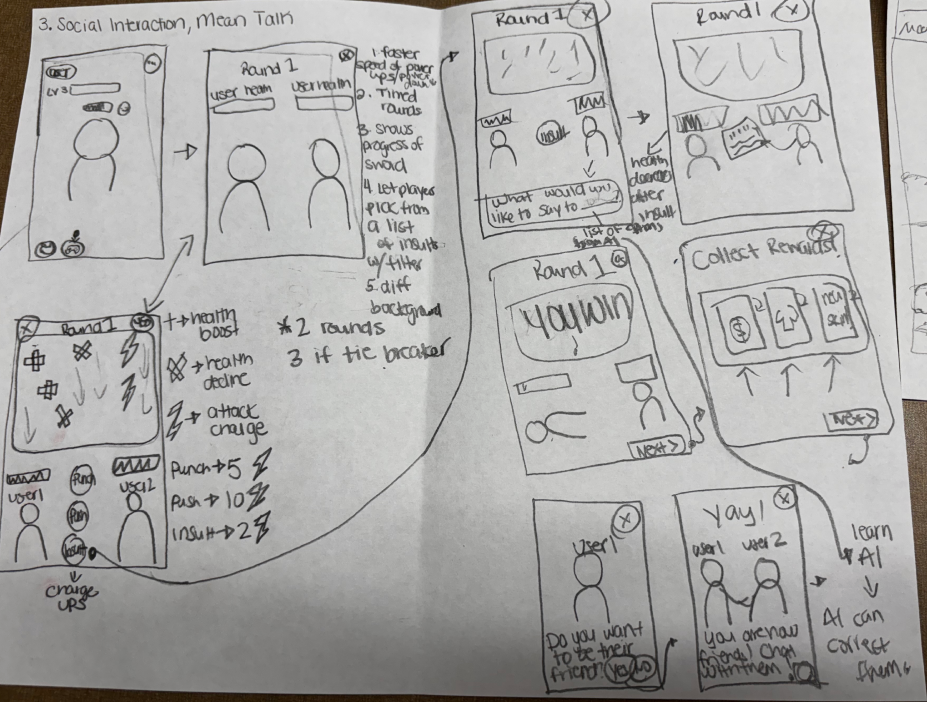
I started with hand-drawn wireframes focused on the core features I wanted to redesign. The messaging feature was reimagined so users could chat with their Meowster without leaving the main screen. For Mean Talk, I introduced selectable response types (funny, smart, mean) and a timed round structure to keep things snappy. I also explored two placements for the Friend Log icon and sketched out a revamped shop with featured skins.
Lo-Fi Wireframes
Social Interaction & Mean Talk — battle rounds, insult selection, win celebration, reward collection, and post-battle friend requests. I sketched, tested, and iterated each screen before moving to digital.
🎨
From Paper to Pixels — Using Starward's Design System
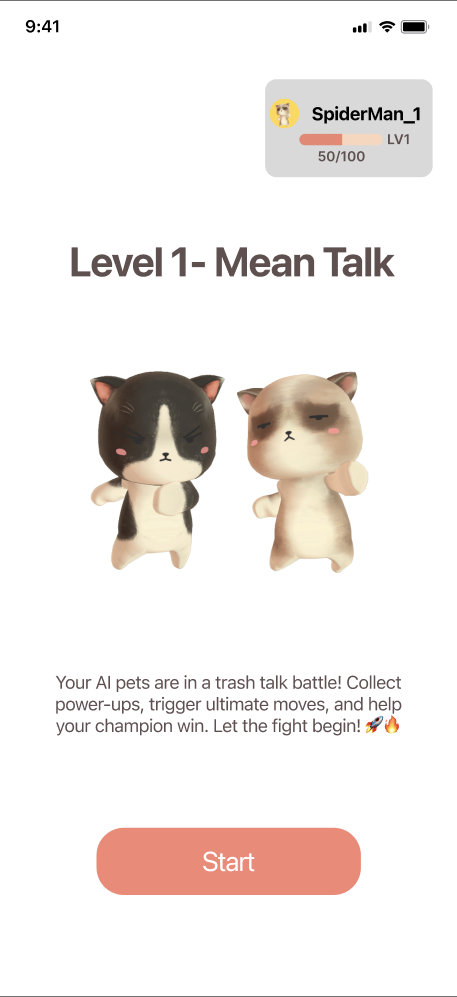
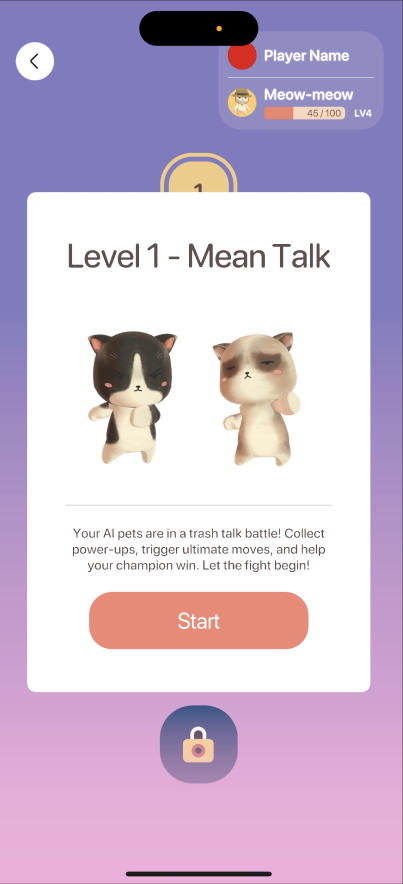
Starward Studios provided a design system file with their 3D character models, color palette, background environments, and UI components. I pulled directly from this system to translate my hand-drawn wireframes into the mid-fidelity screens below — ensuring visual consistency with the existing Meowster brand while introducing new interaction patterns.
Mid-Fidelity: Testing What Sticks
I built mid-fidelity prototypes in Figma and ran preference testing sessions with children aged 15–18, presenting my redesigns side by side against the original Meowster screens. I tested clothing, food, cleaning, messaging, shop, and the Mean Talk mini-game — each comparison rated on a 1–3 scale, tallied across sessions, with the winner advancing to high-fidelity.
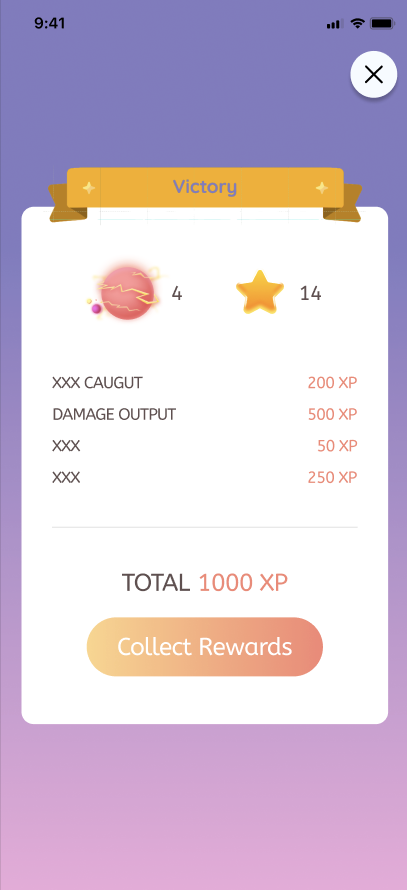
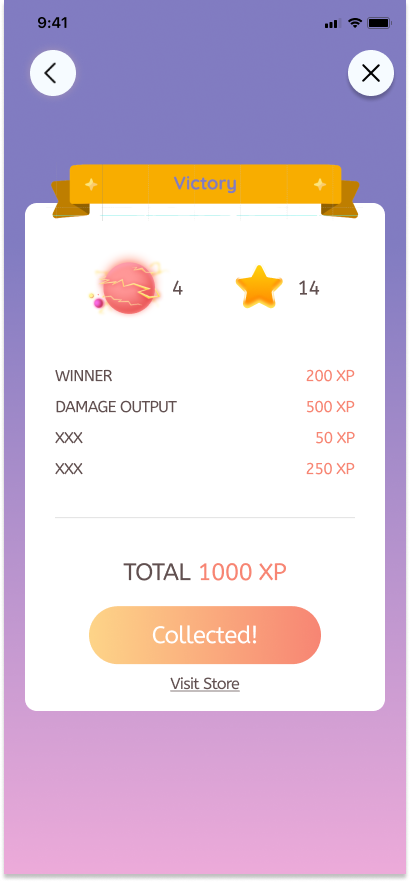
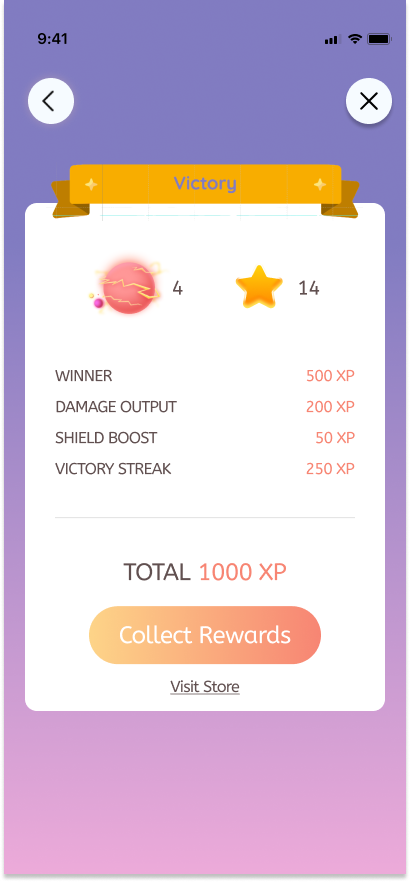
Mean Talk IntroLevel 1 battle setupBattle StartPlayer profiles & startLive BattleInsult selection in actionPower-UpsHealth boost, decline & attackVictory & RewardsXP collection after winningFriend RequestPost-battle social connection
← Swipe to explore all 6 screens →
🔬
How I Tested These Screens
Preference testing with real kids, real data, real decisions
Step 1
📋
Guided Script
Structured questions ensuring every screen was compared in the same order and manner
Step 2
🎥
Screen Recording
Captured facial expressions, hesitations, and verbal feedback during each comparison
Step 3
📊
1–3 Scale Rating
Each screen rated 1–3 per comparison group, then tallied across all sessions
Step 4
✅
Winner Moves Forward
The most-picked screen advanced to high-fidelity — backed by both numbers and reasoning
Preference Testing Results — My Redesign vs. Original
Mean Talk Game
4/4 picked mine
Shop Redesign
4/4 picked mine
Clothing
3/4 picked mine
Food
3/4 picked mine
Cleaning
3/4 picked mine
Messaging
3/4 picked mine
"I picked Screen 2 'cause it felt more intense, gave me more choices, and looked like a real game round, like I was in it."
— Participant, age 18, on Mean Talk power-ups
"I like that you can see the cat when you talk now. It's the most pleasurable to look at over the other 2."
— Participant on messaging redesign
"I like the new options added to the Mean Talk Game. I think it's a little more fun and interactive."
— Participant on Mean Talk overhaul
"I like that feeding the cat has more options now. I also like how the background changes when you pick new clothes."
— Participant on customization
03 — Did It Actually Work?
Putting It in Players' Hands
I ran two rounds of testing on the high-fidelity prototype: preference testing to validate my design choices, and usability testing to see how real kids interacted with the app. Spoiler alert: the cats were a hit.
0
Testing Rounds
6–18
Age Range Tested
0
Screens Validated
Preference Testing
I compared my updated designs against the original Meowster screens using a structured preference testing board. Participants rated each screen on a 1–3 scale, and results were overwhelmingly in favor of my redesigns for clothing, cleaning, food, shop, and the mean talk game. The updated designs were finalized using the most preferred screens from the test.
Usability Testing
I tested with participants aged 8, 14, and 15 — and the feedback was glowing. A separate co-design session with a 6-year-old brought a totally different perspective: she saw Meow Meow as a virtual pet she could play dress-up with, and wanted dinosaurs added to chase the cat. (Noted for v2.)
Loved it
Friend Celebrations
Users adored the celebratory animations when accepting friend requests — jumping cats made the social experience feel joyful and rewarding.
Loved it
Mean Talk Overhaul
The revamped Mean Talk game felt more purposeful and engaging. The timed rounds, multiple power-ups, and strategic choices kept players locked in.
Loved it
Dynamic Backgrounds
The adaptive backgrounds that changed based on actions (feeding, cleaning) were a standout. Players called it immersive and fun.
Loved it
Messaging System
Being able to chat with the Meowster while seeing it on screen felt like a real conversation. The message log feature was the cherry on top.
User Quote
"I would definitely download an app like Meowster. It's both fun and cute — an experience I'd truly enjoy."
04 — The Polished Product
What I Shipped
After rounds of research, co-design, and iteration, here's the final high-fidelity prototype I delivered to Starward Studios. Every screen was refined based on real feedback from kids aged 6–18 and their parents.
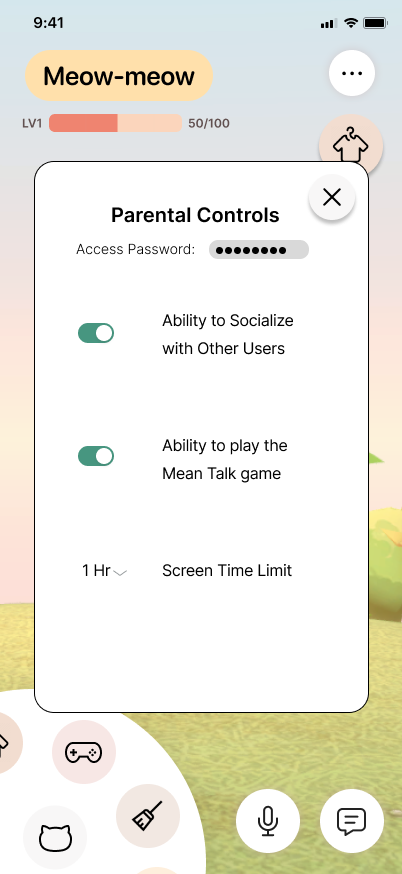
Parental ControlsFeature toggles for caregivers
HomeYour Meowster awaits
Mean Talk IntroLevel 1 onboarding
Attack StyleChoose your insult tone
You PickedStyle confirmation
How to WinPower-up guide
Battle — Round 2Active gameplay
Battle — Hit!Opponent takes damage
VictoryXP rewards breakdown
Rewards CollectedReady for next battle
← Scroll to explore all screens →
05 — The Curveballs
Plot Twists I Didn't See Coming
Real Talk
No project goes perfectly — here's where mine got interesting.
Challenge
AI Ethics with Kids
Parents of younger children raised serious concerns about their kids interacting with AI — worrying about blurred reality, emotional manipulation, and screen time. I had to balance engagement with responsibility.
My Move
Parental Controls & Transparency
I built a Parental Controls screen that lets caregivers disable specific features. I also planned a mock feature to help younger kids understand the AI isn't a real friend — just a fun one.
Challenge
Age Range Complexity
Designing for ages 6–18 is wild. A 6-year-old wants dinosaurs chasing cats. A 15-year-old wants strategic gameplay. The Mean Talk feature was flagged as confusing for younger users with some responses referencing adult topics.
My Move
Age-Adaptive Content
I introduced the "Insult Style Selection" feature (snarky, witty, silly) so players control the tone. I also recommended age-gated content filtering and allowing parents to toggle chat and games off entirely.
Challenge
No Existing Research or User Base
The client had no prior user research and no established audience for us to build on. On top of that, the target audience kept shifting — and at the last minute, they tried to pivot from under-18 to 18+, which would have undone months of kid-centered design work.
My Move
Pushing Back as a Designer
I stood my ground. As a designer, I'm flexible and collaborative — but I also know my boundaries. I pushed back firmly and insisted the audience stay 18 and under, backed by all the research I'd done with kids and parents. Being lenient doesn't mean being a pushover — it means knowing when to hold the line to deliver the right product on time.
Challenge
Client Communication Gaps
Time zone differences and inconsistent engagement from the client made collaboration difficult. Meetings were frequently skipped, feedback was delayed, and at times we were left in the dark on key decisions — all while the deadline kept approaching.
My Move
Proactive Alignment & Documentation
I started sending structured async updates, documenting decisions with clear rationale so nothing stalled waiting on a meeting. When we did connect, I came prepared with specific questions and options to maximize the time. It taught me that working around communication gaps is just as important as the design work itself.
06 — The Payoff
What I Shipped & What I Learned
A Complete Redesign, Delivered to Starward Studios
I delivered a polished high-fidelity Figma prototype with redesigned features across messaging, gameplay, customization, social interactions, and parental controls — all grounded in research and validated through testing with real users aged 6–18.
The project also aligned with three United Nations Sustainable Development Goals:
SDG 4
Quality Education
Fostering creativity and learning through play-based AI interaction.
SDG 10
Reduced Inequalities
Designing inclusive experiences across age, background, and ability.
SDG 9
Innovation
Pushing forward ethical AI-driven entertainment for children.
What I Took Away
01
Design With Kids, Not For Them
Co-design sessions surfaced ideas I never would've generated alone. Kids think differently — and their creativity is a design superpower when you let them lead.
02
Safety Is a Feature, Not an Afterthought
Parental concerns around AI and children are real and valid. Building parental controls and content moderation early earns trust and makes the product stronger.
03
Preference Testing > Guessing
Showing users two options and asking "why" produced richer insights than any assumption I could have made. Let users tell you what works — then listen.
04
Playfulness Is a UX Strategy
Celebratory animations, dynamic backgrounds, and personality-driven gameplay aren't just fun — they drive engagement and emotional connection. Joy is a metric.